Category: Finance

  • Risks in passive investing

    Dan Amoss talking about the incoming risks to passive investments.

    These funds don’t try to beat the market. They are the market. They buy stocks based on their size in the index, no questions asked.

    On the surface, this passive revolution appears brilliant. Passive funds are cheap, with management fees close to zero. They have performed well in the past. And they require no effort.

    But like so many financial innovations that seem too good to be true, this one comes with hidden risks that few investors understand.

    According to Mike Green, chief strategist at Simplify Asset Management, this passive revolution has created unintended side effects that could end in disaster.

    Green calls passive investing the “giant mindless robot.”

    Why?

    Because when new money flows into index funds, it doesn’t sit on the sidelines. This money flow is not completely isolated from the index it tracks. Rather, it buys stocks immediately. And not just any stocks. It allocates the largest share of incremental purchases to the largest stocks (like Apple, Microsoft, Nvidia, and Amazon) because those names dominate the index.

    This creates what economists call a “price-insensitive buyer” – the most dangerous type of market participant. The money flows in, the big stocks get bigger, and the index rises. That rise draws in more money, which buys more shares, pushing prices even higher.

    It’s momentum on autopilot.

    Here’s where Goodhart’s Law reveals the fundamental problem. The index has become the target of trillions of dollars in retirement accounts, pensions, and ETF flows. It’s no longer as good a measure of economic strength as it once was!

    The post is written from a US perspective, but I believe something similar will play out in India over the coming decades.
  • Six years with Franklin India Mid Cap Fund (erstwhile Franklin India Prima Fund)

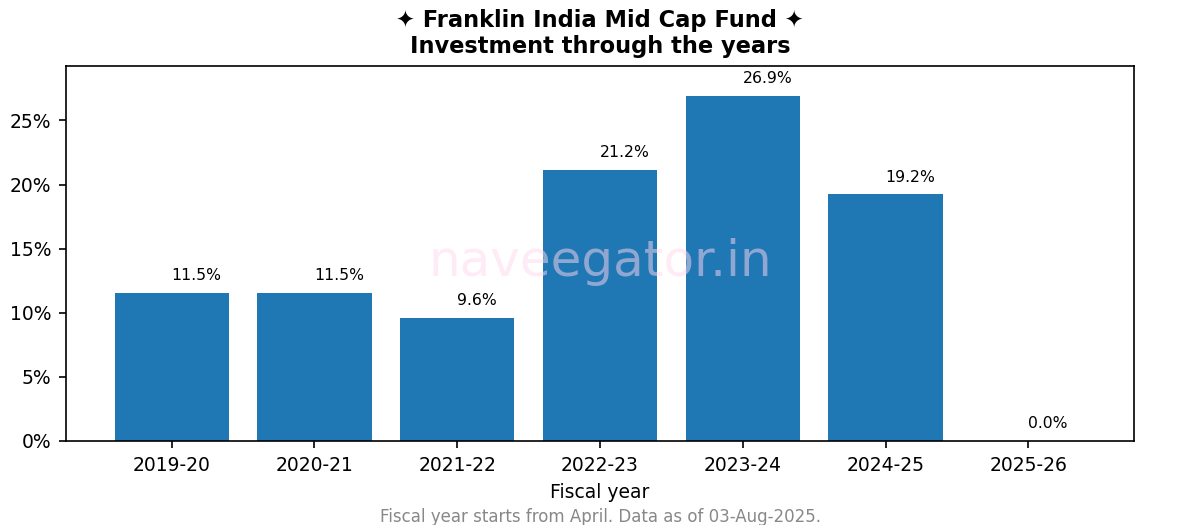
    My investment in Franklin India Prima Fund continues in the sixth year. Along with the fund house renaming it from Franklin India Prima Fund and me stopping my SIP in Jan’25 there were no other significant events that happened since last one year. I plan to continue to hold this fund for long term and will restart my SIPs once my current financial commitments are taken care of. 

    Figure 1

    Franklin India Mid Cap Fund continues to underperform Nifty Midcap 50 although over the last 1½ years the gap has reduced a bit (Figure 2). The Trump tariffs are very much visible in the Figure 2. A steep drop in profit starting from Jan’25 and then recovery starting from Mar’25. 

    (more…)
  • Ten years as shareholder of HDFC Bank

    Somewhere in June 2015, I got a call from ICICI Direct that I had been assigned a relationship manager and he wanted to help me with my equity investments. Being naive to the world of equities, I decided to give it a try. I met my relationship manager and he helped me setup my ICICI Direct account. 

    “Which stock should I buy to start with?” I asked my relationship manager. 

    “HDFC Bank”

    “What? And not ICICI Bank? But you work for ICICI Bank!”

    “Because HDFC Bank is better.”

    I heeded to his advice and bought my first shares of HDFC Bank. It has been ten years since that.

    (more…)
  • Eight years as shareholder of Divi’s Laboratories

    My investment in Divi’s Laboratories has been my biggest missed opportunity. Eight years back—still new to equity investing—I was looking for pharma stocks to invest. During that research—not sure if I should call it research, but let’s go with it—I came across Divi’s Laboratories. I made a small investment in it and forgot about it. In the next 3.5 years the stock went up 5 times! (Figure 1) And I did not make a single new investment during that time! (Figure 2) Every time I thought “it can’t go up any further than that”. Boy was I wrong. So, so wrong!

    (more…)
  • Seven years with DSP ELSS Tax Saver Fund

    My investment in DSP ELSS Tax Saver started as a way for me to save tax. When I started, I had selected two funds for my ELSS investments, the other one being L&T Tax Advantage Fund. Back then the conventional wisdom to save tax was to invest in ELSS rather than PPF for 80C. Especially if you are young and have a long road ahead of you.

    I went via the SIP route and my initial three SIPs were in regular plan. After reading a bit more, learning about direct plans and their lower expense ratios I paused the regular plan SIP and moved to a direct plan.

    During my initial years the SIP amount was very low. You can see in Figure 1 that the total investment I made in DSP ELSS Tax Saver Fund during FY 2018-19 is just 2.2% of my overall investments. But as I was tracking the performance of DSP ELSS Tax Saver, I realised the fund was significantly outperforming my other investments—both equity and mutual funds. This prompted me to steadily increase my investments year or year. Come every April and I would increased my SIP amount. The percentage didn’t matter. I increased to whatever I thought I could manage for the next one year. I also sprinkled lump sum investments in between my SIPs—sometimes because I had surplus money to invest, others when the markets were in a tizzy due to some or the other global events.

    Figure 1
    (more…)
  • Six years as shareholder of Dabur

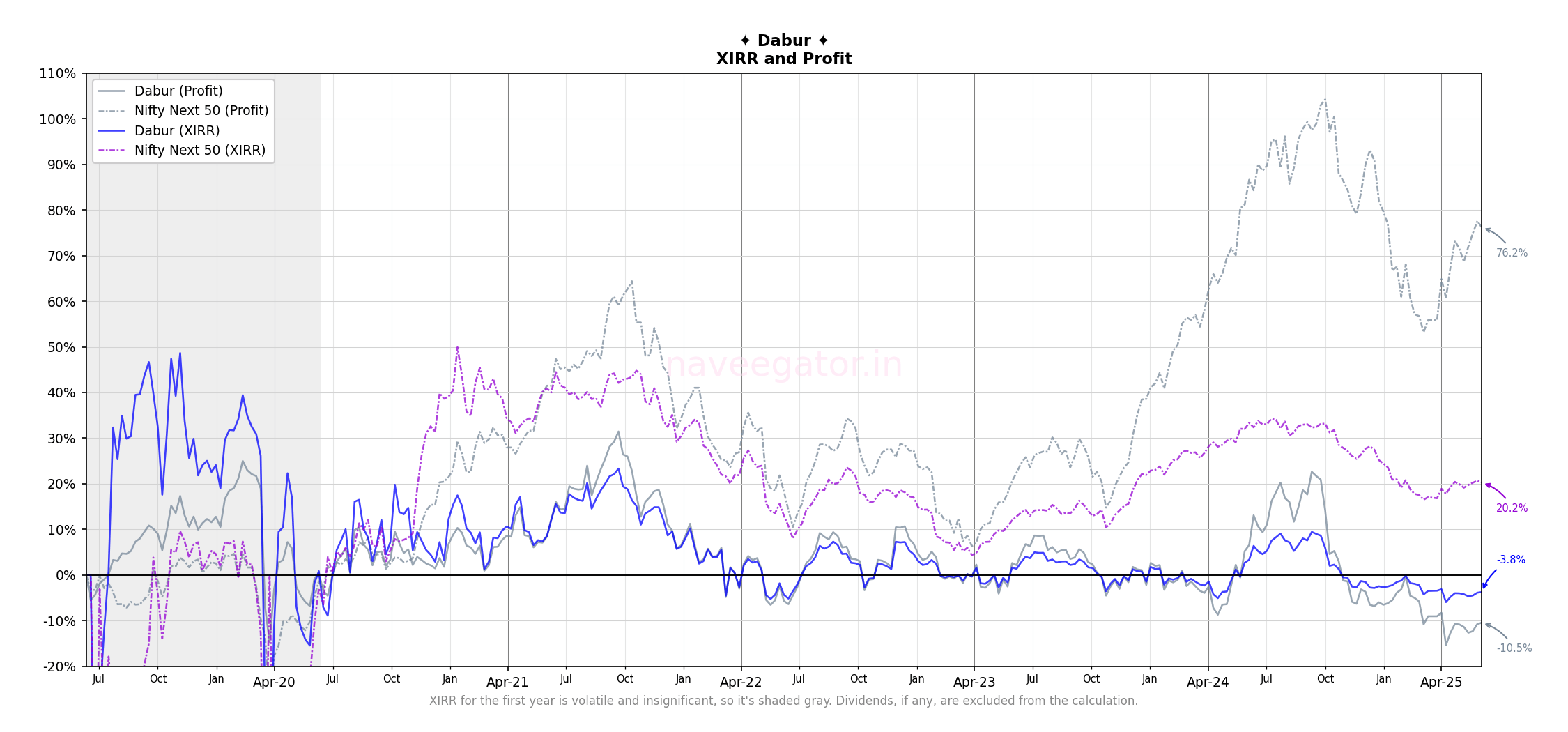
    There is really nothing for me to write about my investment in Dabur. Just like D Mart, the journey has been a painful one. The XIRR (Figure 1) has snaked around the 0% value on the X axis since last six years and as of today it stands at -4.2%. In contrast the Nifty Next 50—of which Dabur is part of—is at an impressive 19.1%. In fact, in the last six years Dabur has unperformed Nifty Next 50 for 5 years.

    Figure 1
    (more…)
  • Six years with Axis Bluechip Fund

    Back in 2019, at my previous workplace, we had a bit of a tradition. Every month or so, stalls would pop up, selling everything from clothes to toys and other knick-knacks. During one of those fairs, I connected with a mutual fund advisor and struck up a conversation about investing. He recommended three funds, one of which was the Axis Bluechip Fund. Since I was investing through an advisor, it would be a regular plan.

    Now, I was fully aware of the higher expense ratio that comes with a regular plan. But given that my earlier picks—HSBC ELSS Tax Saver Fund (erstwhile L&T Tax Advantage Fund) and Motilal Oswal Long Term Equity Fund—hadn’t quite met my expectations, I figured it was worth getting some professional help this time. As you read along and see the performance of Axis Bluechip Fund, you will realise that getting professional help, hasn’t helped much. And this is not to put shade on my mutual fund advisor. It is just that some events—as you will read later—are really beyond anyone’s control.

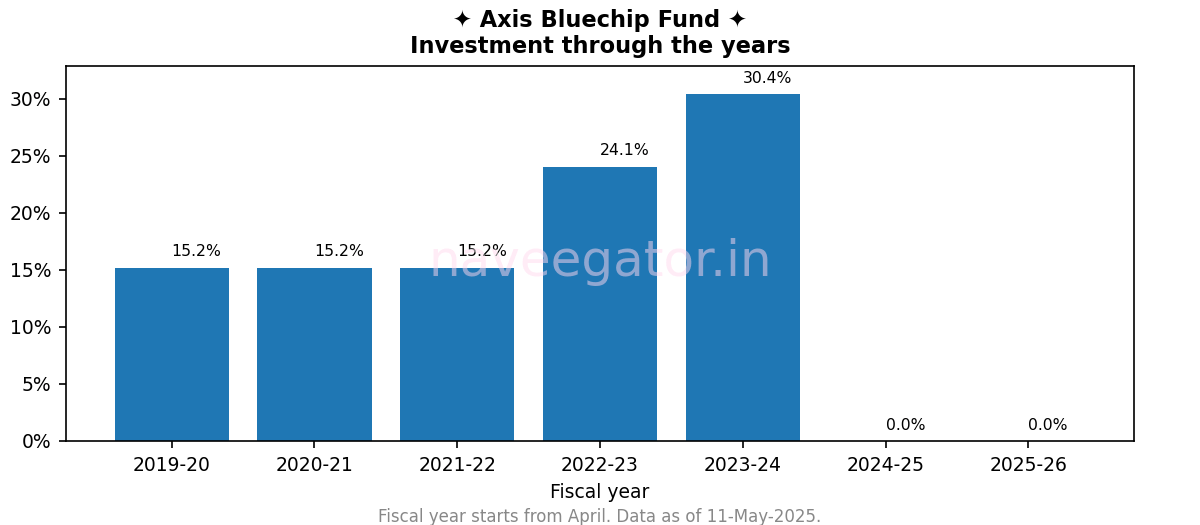
    I have stayed with Axis Bluechip Fund for five years starting FY 2019-20. In Sep’22, I decided to increase my SIP. However, this time, I opted for the direct plan to reduce the expense ratio. As a result, this analysis includes investments made through both the regular and direct plans. You can see the uptick in my investments since FY 2022-23 in Figure 1.

    Figure 1
    (more…)
  • Google Sheet to track your equity and mutual fund investments

    I might be providing a solution which would have been solved umpteen times. But this solution is something I use and was born out of my own unique requirements. 

    Click here to view the Equity & Mutual Fund Investment Tracker

    Figure 1

    Who is this sheet for? 

    1. Someone who is buying and not selling. Yes, no selling. In fact, I only track my buy transactions in this sheet. If you are a trader then this sheet is useless for you. You can skip reading the rest of the post. But if you are a long term investor—like me—then give this sheet a try. 
    2. Someone who wants to see how their equity and mutual fund investments are performing vis-à-vis Nifty indices or competing mutual funds. 
    3. Someone who wants to see how their equity investments are performing taking into consideration demergers that will happen along the way of their investment journey. Remember this is for long term investors.

    Quick disclaimer. I have tested it only for Indian equities and mutual funds. Although I have kept it generic, it should work for other assets, but no guarantees.

    Now coming to the Google Sheet itself.

    It is divided into three tabs. 

    1. Summary: This is where you will see details—Profit, XIRR, performance vis-à-vis Nifty index or mutual fund—of all your investments based on the data that you have entered in the Transactions tab. 
    2. Transactions: This is where you will enter your transactions. Remember, only buy transactions. No sell transactions. 
    3. Index Master: This is where you will list all the indices that you want to compare your investments against. This will end up showing in the Summary tab (column F). You will be updating this tab once in a while. 

    How to use this sheet?

    It’s a two-step process.

    First, go to the Transactions tab (Figure 2) and enter the data in columns A to E. Columns F to J are all formulas and should not be modified.

    Figure 2

    In column B you will be entering the code of your equity or mutual fund that appears when you search for it on Google Finance. Some examples are given below.

    For symbol, there is a space that Google adds after the colon. Remove that space before adding it to the column B, else the formula will give error. 

    At times companies demerge some of their entities. Like Greenply did with Greenpanel and Grasim did with Aditya Birla Capital. To track these demerged entities, add the transaction of demerged entity with zero cost and the appropriate symbol name. You can see this in action in row 4 (Figure 2) where I added Greenpanel transaction with zero cost (column D) and Greenpanel symbol (column B). For the name (column A), keep it the same as Greenply since we received this share due to our investment in Greenply.

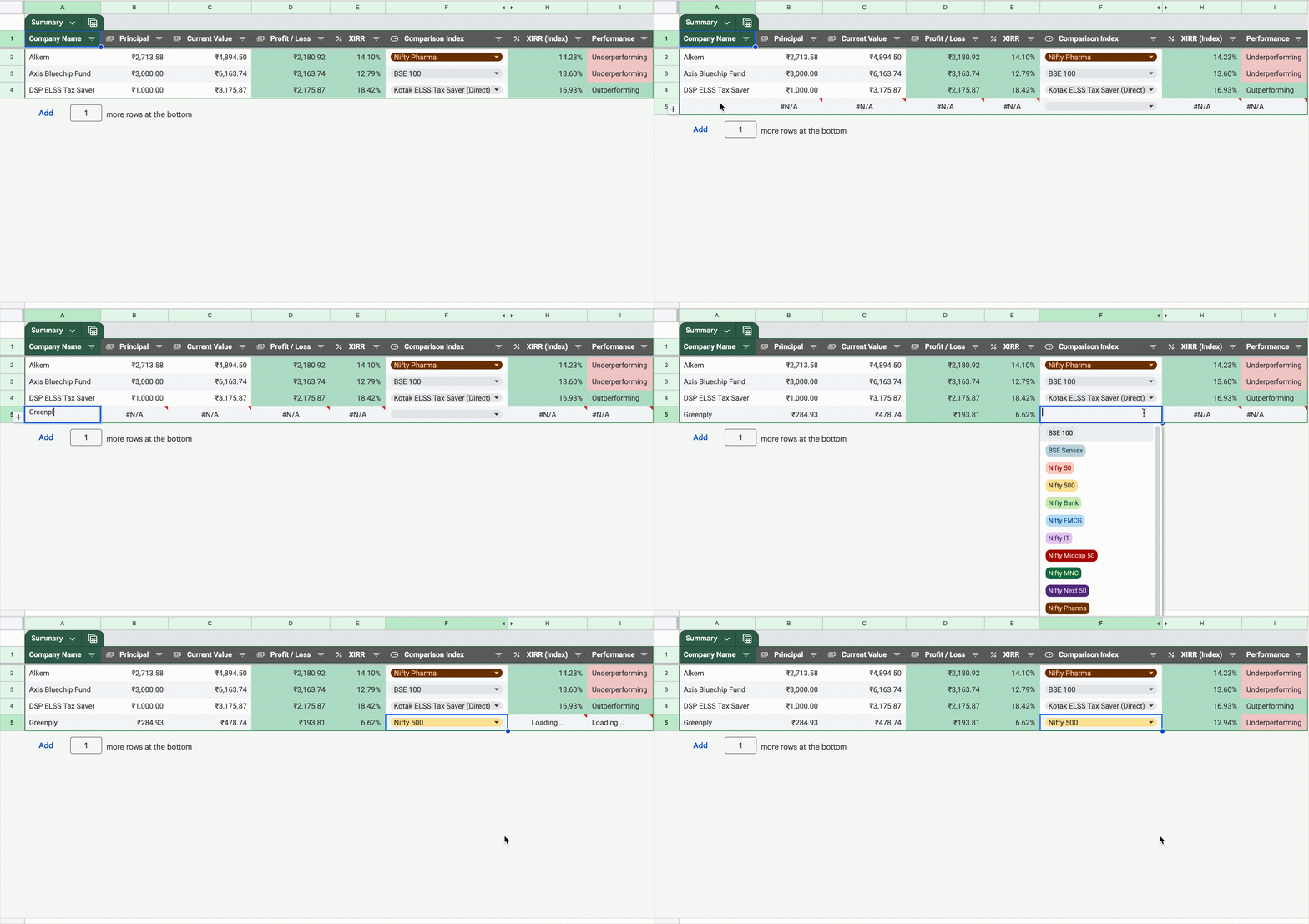
    In the second step, you come to the Summary sheet. Here you add a new row and in the column A you mention the name of company of mutual fund matching the name you entered in the column A of Transactions tab. If the formula for the other columns doesn’t get auto updated, drag the formulas from the above row and select the Comparison Index (column F) to appropriate index. You can see this in action in Figure 1.

    A couple of additional notes. 

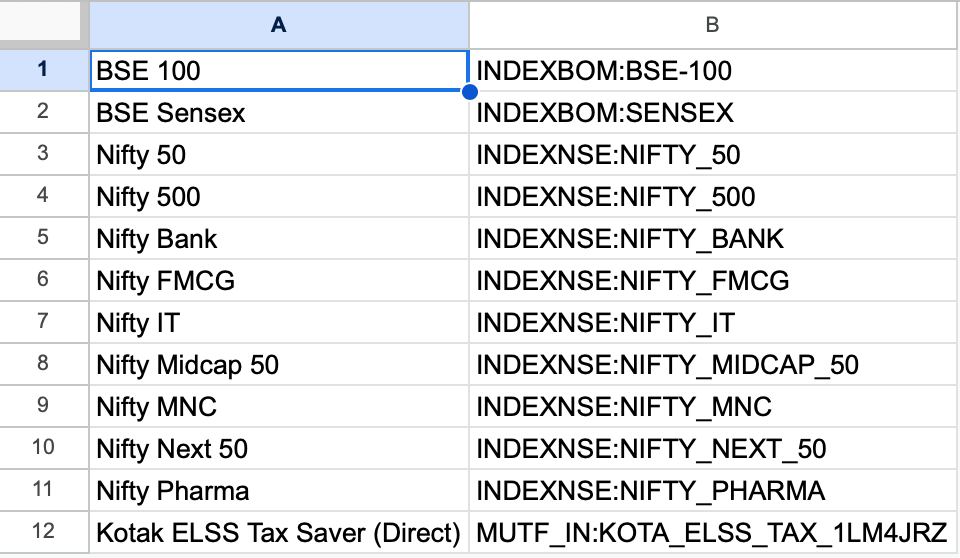
    If you want additional indices or mutual funds to be compared you can add them in the Index Master sheet (Figure 5). The column B is the symbol name that appears on Google Finance. Just like we did in Figure 3 and 4. The column A is the name and you can enter the text that you want. 

    Figure 5

    The mutual fund data that Google fetches is a bit stale. Maybe by 2-3 business days. Keep that in mind if you are looking at this sheet and making a sell decision.

  • Six years with Mirae Asset Large & Midcap Fund

    Back in 2018, at my previous workplace, we had a bit of a tradition. Every month or so, stalls would pop up, selling everything from clothes to toys and other knick-knacks. During one of those fairs, I connected with a mutual fund advisor and struck up a conversation about investing. He recommended three funds, one of which was the Mirae Asset Emerging Bluechip Fund. Since I was investing through an advisor, it would be a regular plan.

    Now, I was fully aware of the higher expense ratio that comes with a regular plan. But given that my earlier picks—HSBC ELSS Tax Saver Fund (erstwhile L&T Tax Advantage Fund) and Motilal Oswal Long Term Equity Fund—hadn’t quite met my expectations, I figured it was worth getting some professional help this time.

    As the months went by and I saw how this fund was performing, I wanted to increase my SIP amount. However, Mirae Asset had placed inflow restrictions on the fund due to its rapid growth and rising AUM. So, I continued with the original SIP amount.

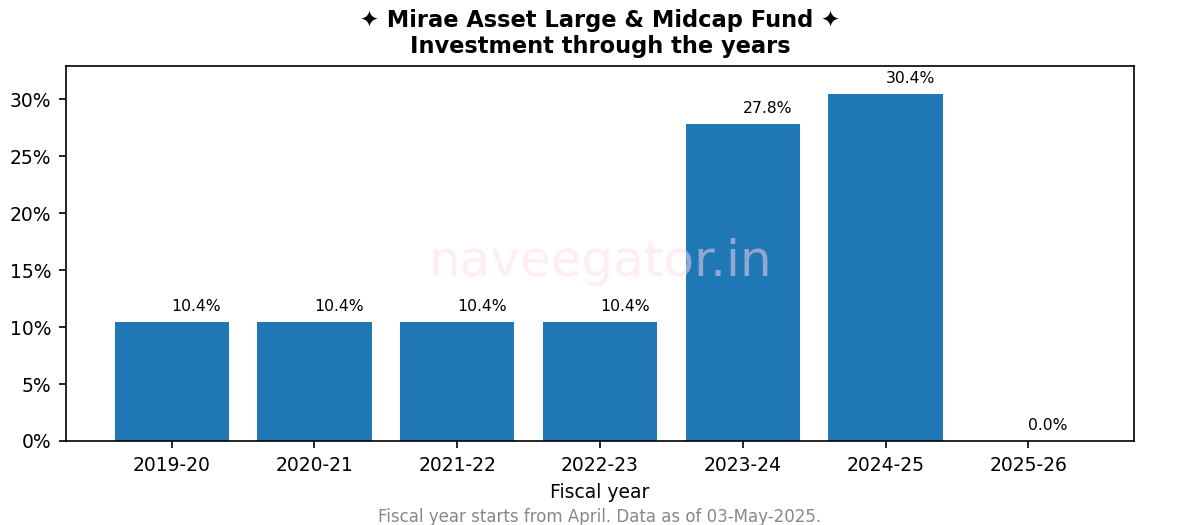
    In Oct’23, when Mirae Asset increased the SIP cap, I didn’t waste time. I started a new SIP in the direct plan to benefit from the lower expense ratio, while continuing the old SIP in the regular plan. That’s why you’ll see a noticeable increase in my investment from FY 2023–24 (see Figure 1). Just a month later, in Nov’23, the fund was renamed to Mirae Asset Large & Midcap Fund.

    Figure 1

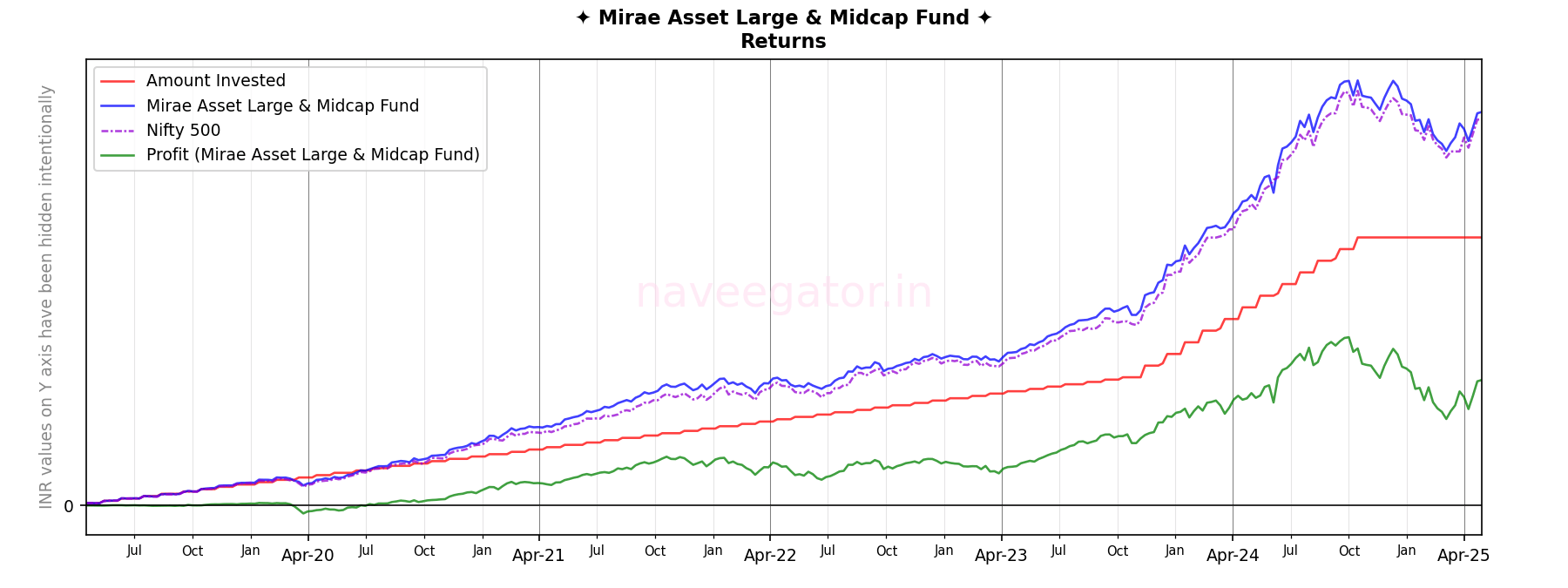
    By Nov’24, I paused both SIPs—regular and direct—as I’d invested in a home to diversify my investments and needed capital for the same.

    Figure 2

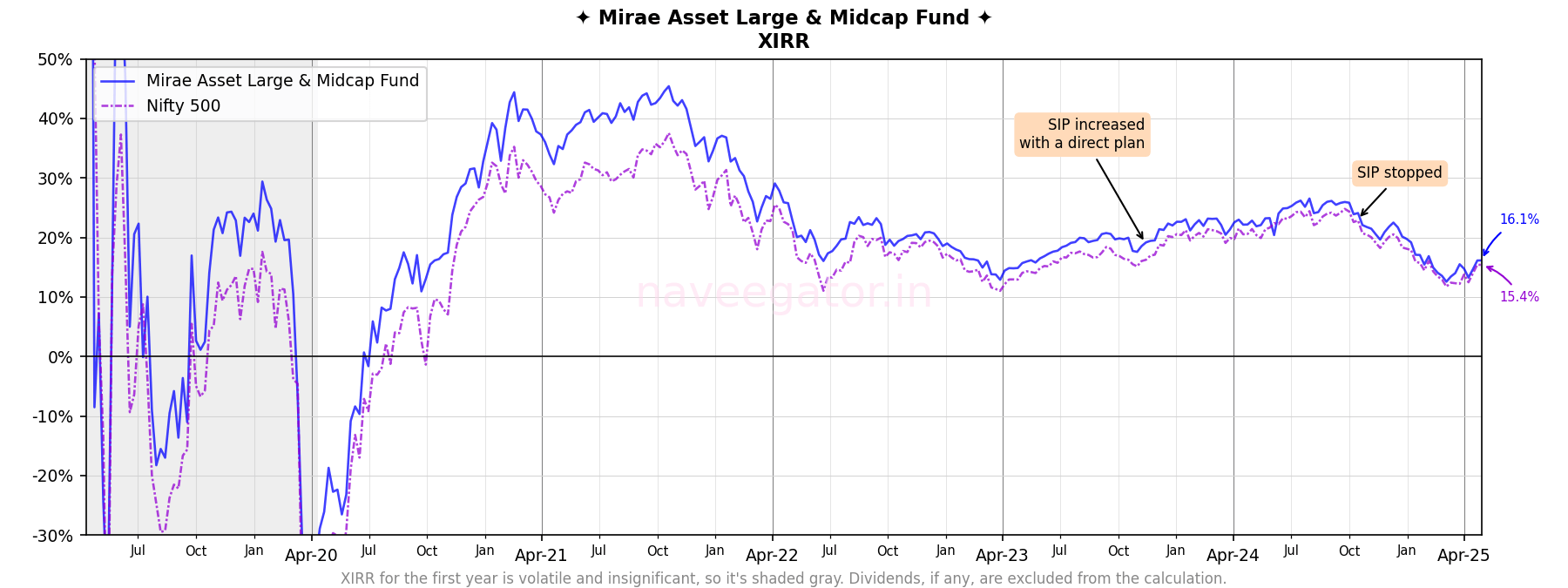
    The fund’s benchmark is the Nifty Large Midcap 250 TRI. But since I couldn’t find clean, consistent data for it, I chose to compare the fund’s performance against the Nifty 500 Index instead. Over the years, the fund has consistently outperformed the Nifty 500 (see Figure 3).

    Figure 3

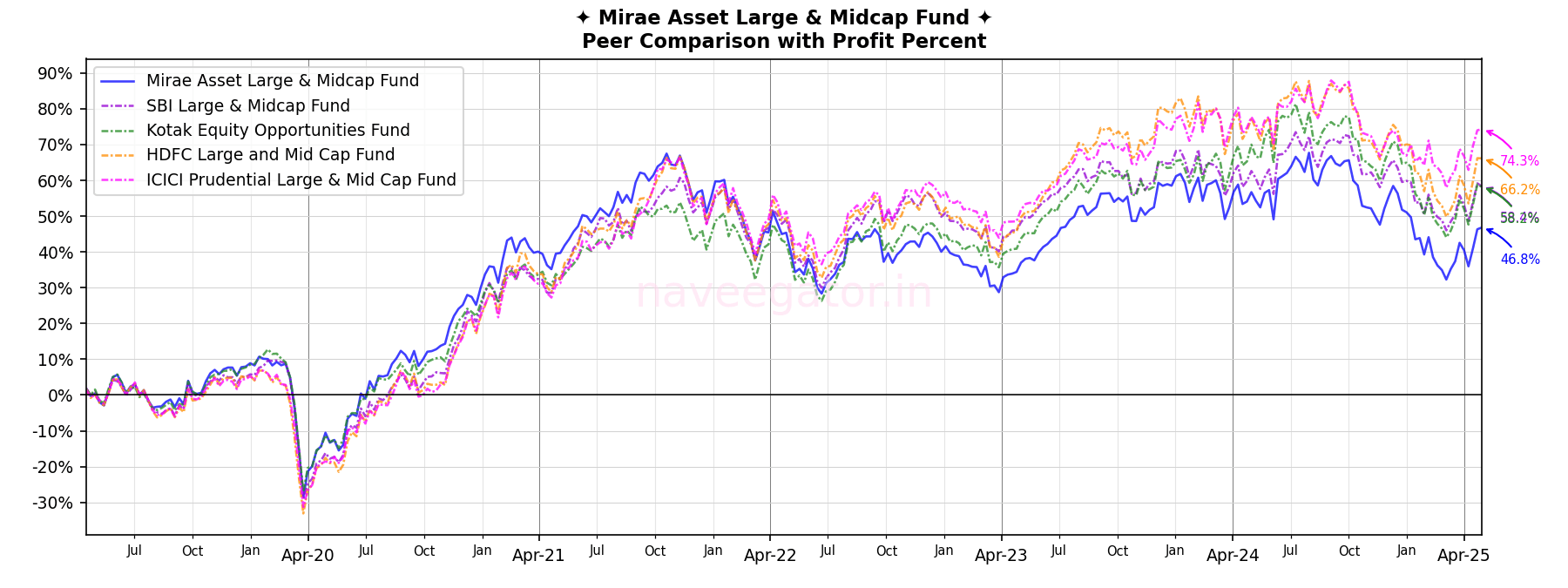
    While this comparison looks impressive, things change when I compare the Mirae Asset Large & Midcap Fund with its peers. I’ve compared it with the following direct plans, and Figure 4 shows the profit percentage for each:

    1. SBI Large & Midcap Fund
    2. Kotak Equity Opportunities Fund
    3. HDFC Large and Mid Cap Fund
    4. ICICI Prudential Large & Mid Cap Fund
    Figure 4

    Mirae Asset’s fund was a top performer until Oct’21. But since then, its performance has deteriorated, and it’s currently the lowest among its peers.

    Still, I’m hopeful that in the coming years, the Mirae Asset Large & Midcap Fund will recover and close the gap in performance.

  • Six years as shareholder of Polycab

    Back in 2019, I applied for Polycab’s IPO—more out of curiosity than conviction—and to my surprise, I landed an allotment. The stock listed at a 21% premium on day one. Not a bad start for what would become one of my most profitable investments.

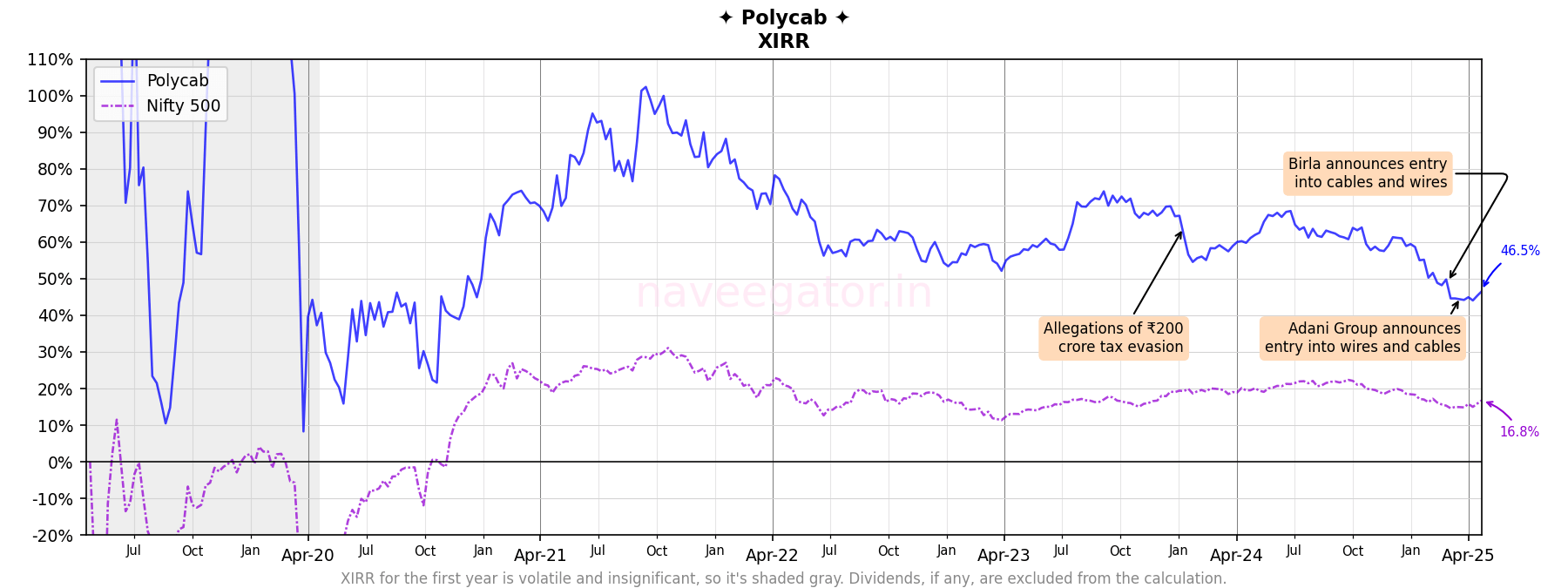
    Over the years, Polycab turned out to be more than just a lucky bet. The wires and cables space might not sound glamorous, but Polycab made it exciting for me. By mid-2023, my investment had returned close to 500% (Figure 2), and the XIRR (Figure 1) was hovering around 70%—the kind of performance I’d only dreamt about.

    Figure 1
    Figure 2

    Then came the curveballs.

    First, in late 2023, Polycab got hit with allegations of a ₹200 crore tax evasion. The stock corrected sharply. Overnight, my paper profits shrank, and my XIRR dropped from 70% to 55% (Figure 1), while total gains fell from 500% to around 350% (Figure 2). That wasn’t easy to watch, but I decided to hold on. Why? Because these were just allegations, and investigations were still ongoing. I had no clue whether they were true or not—and to be honest, I still don’t. So, I chose to do nothing.

    Second, big names like the Aditya Birla Group and Adani Group have thrown their hats into the wires and cables ring. This kind of competition will almost certainly eat into Polycab’s market share. The share price has been under pressure, and along with FII sell offs, it’s eroded a significant portion of my paper profits.

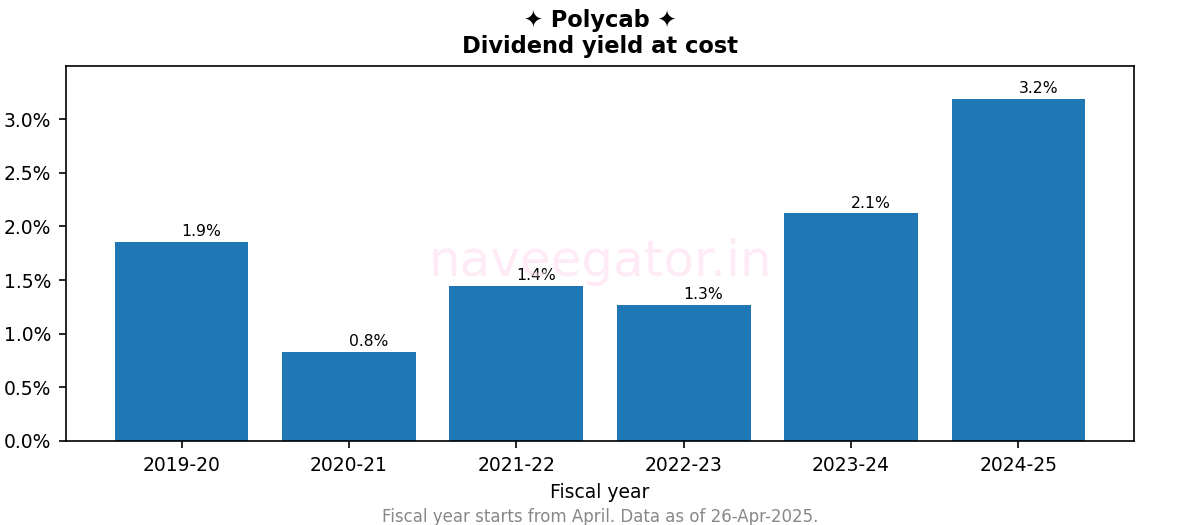
    One good thing about my investment in Polycab is the dividend yield (Figure 3). In FY 2024–25, it offered a yield at cost of 3.2%, which is quite decent.

    Figure 3

    When I reflect on the last six years, Polycab has taught me a lot—about patience, conviction, and that at times being ignorant helps. But the real test lies ahead.